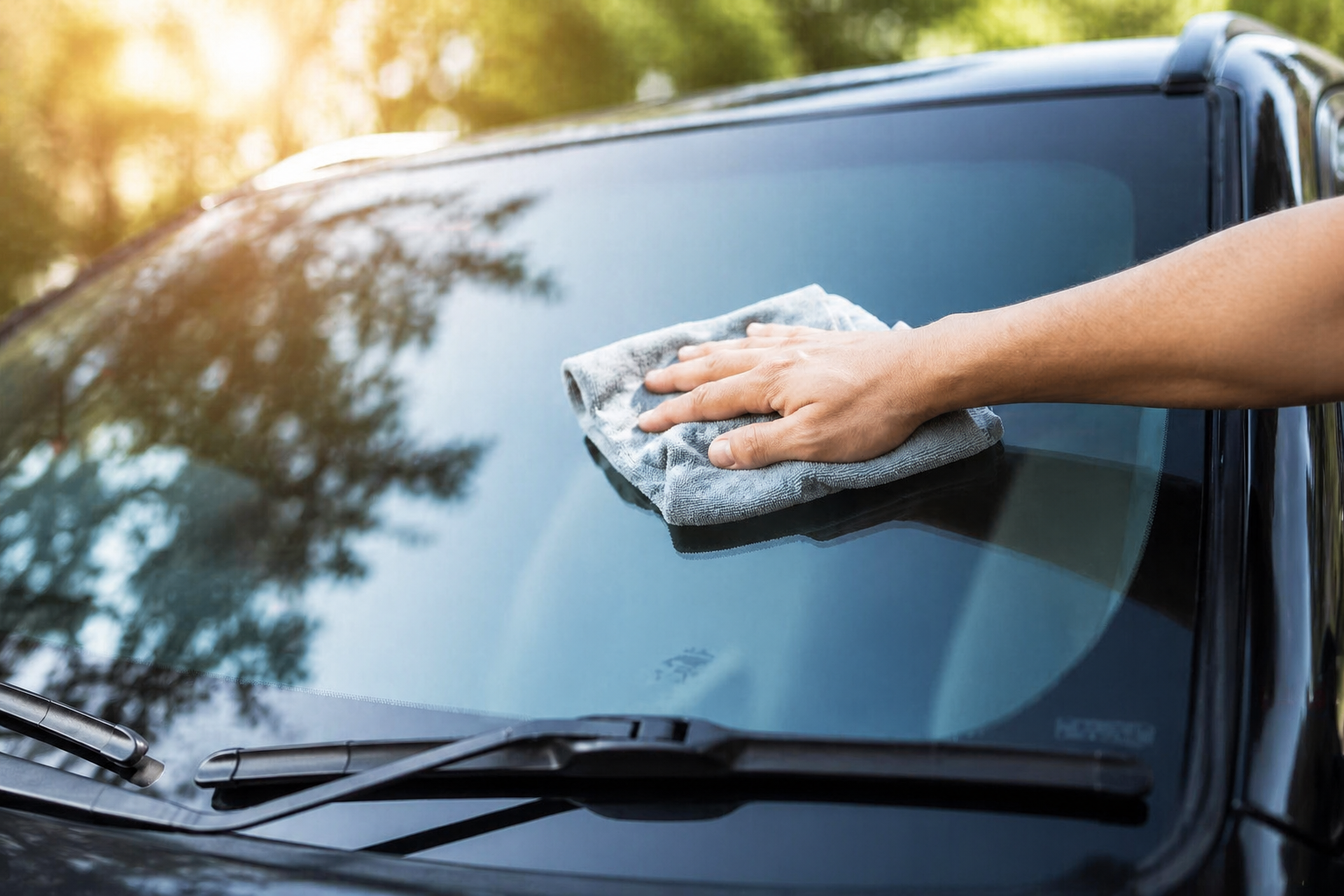
A Simple Method to Make Your Car Glass Crystal Clear (Without Expensive Products)
most drivers clean… but don’t actually clean
They wipe.
They rinse.
They spray random products.
And still:
- streaks remain
- glare appears at night
- glass looks “cloudy” in sunlight
This happens because the problem is misunderstood.
the real issue
Your windshield is not just dirty.
It’s layered.
what builds up on your glass
Over time, your windshield collects multiple types of contamination. Each behaves differently — and requires a different approach.
- road dust and sand
- oil film from traffic and asphalt
- insect residue
- washer fluid buildup
- air pollution particles
- interior vapor and plastic residue
Most people try to remove all of this in one step.
That’s why it fails.
the mistake
One product.
One wipe.
One pass.
why this doesn’t work
Because:
- water doesn’t dissolve grease
- glass cleaners evaporate too fast
- pressure spreads dirt instead of removing it
Result:
You don’t clean the glass.
You redistribute the contamination.
the correct approach
Cleaning a windshield is a process.
Not a single action.
the method…
- break grease
- lift dirt
- remove residue
- dry correctly
- polish for clarity
Each step solves a different layer.
Skip one — and the result drops immediately.
what you need (simple tools only)
No expensive detailing kits.
Everything here is accessible:
- warm water
- dishwashing liquid
- liquid household soap
- two containers or buckets
- a soft sponge
- a microfiber cloth
- optional: newspaper
This works better than most commercial cleaners — if used correctly.
step 1 — break the grease
why this matters
The biggest invisible problem on your windshield is oil.
It comes from:
- road surfaces
- exhaust gases
- rubber particles
- environmental pollution
This creates a thin film you can’t see clearly — but you notice it when light hits the glass.
solution
Mix:
- warm water
- a small amount of dishwashing liquid
Dish soap is designed to break down fat.
That’s exactly what your windshield needs.
process
- soak the sponge
- apply the solution evenly
- clean the entire surface
- focus on edges and corners
Do not rush.
Do not press hard.
Let the chemistry work.
critical detail
After applying the solution:
wait 5 minutes
why waiting is important
Grease doesn’t disappear instantly.
It needs time to:
- soften
- separate from the surface
- become removable
Skipping this step reduces effectiveness significantly.
step 2 — remove the loosened layer
what changed after step 1
The grease is no longer attached strongly.
Now you need to remove it completely.
second solution
Mix:
- clean water
- a small amount of liquid household soap
why a second wash is necessary
Many people think the first wash is enough.
It’s not.
The first step breaks contamination.
The second step removes it.
process
- use a clean sponge
- apply evenly across the glass
- move in smooth, controlled strokes
No pressure.
Pressure is not cleaning.
what this step prevents
- streak formation
- oily reflections
- uneven clarity
step 3 — proper rinsing
This is where most results fail.
what goes wrong
People rinse quickly.
Or not fully.
Even a small amount of soap left on the glass will:
- dry into streaks
- create haze
- reflect light unevenly
correct rinse
- use clean water
- rinse thoroughly
- check edges and corners
If unsure — rinse again.
rule
If soap remains, the job is not finished.
step 4 — correct drying technique
Drying is not just removing water.
It defines the final result.
tool
Microfiber cloth
why microfiber works
- high absorption
- no lint
- minimal friction
- safe for glass
technique
- start from the top
- move downward
- use straight lines
- rotate the cloth regularly
what to avoid
- circular movements
- wet cloth
- rushing
why technique matters
Water left on glass doesn’t disappear cleanly.
It dries into:
- mineral spots
- streaks
- visible marks
step 5 — polishing (optional, but powerful)
If you want a “perfect” result — this step changes everything.
tool
Crumpled newspaper
why it works
- slight abrasive effect
- removes micro-residue
- enhances clarity
process
- light pressure
- quick movements
- full surface coverage
result
- deeper transparency
- no micro-streaks
- “invisible glass” effect
inside the windshield — the hidden problem
Most drivers ignore this completely.
what builds inside
- moisture from breathing
- air conditioning residue
- plastic evaporation from dashboard
why it matters
At night, interior contamination causes:
- glare from headlights
- foggy appearance
- reduced contrast
cleaning method (inside)
- use minimal water
- slightly damp microfiber
- gentle movements
finish
Dry completely.
No moisture should remain.
when to clean your windshield
Timing affects results more than people think.
best conditions
- cloudy weather
- early morning
- evening
avoid
- direct sunlight
- hot glass
- windy conditions
why
Heat causes:
- fast evaporation
- streak formation
- uneven drying
Wind adds:
- dust during cleaning
- instant re-contamination
common mistakes (and why they fail)
using one cloth for everything
Problem:
- transfers dirt from body to glass
Result:
- scratches
- streaks
skipping degreasing
Problem:
- oil layer remains
Result:
- glare
- haze
pressing too hard
Problem:
- spreads dirt
- creates micro-damage
using cheap cleaners
Problem:
- leave residue
- create fake shine
cleaning too fast
Problem:
- incomplete process
Result:
- repeated work later
common problems and solutions
streaks after cleaning
Cause:
- soap residue
- dirty microfiber
Solution:
- rinse again
- use clean cloth
greasy shine in sunlight
Cause:
- oil film not removed
Solution:
- repeat degreasing step
white spots
Cause:
- hard water minerals
Solution:
- dry faster
- use cleaner water
scratches
Cause:
- dirt particles on sponge
Solution:
- always clean tools before use
why this method works better than store products
most commercial cleaners
- evaporate quickly
- don’t break heavy grease
- leave chemical traces
this method
- removes contamination layer by layer
- uses correct chemistry
- ensures full removal
- improves long-term clarity
long-term maintenance
Cleaning once is not enough.
Consistency matters.
simple habits
- light cleaning once a week
- deep cleaning when needed
- replace wiper blades regularly
- use proper washer fluid
small rule
Never treat glass like paint.
It behaves differently.
the real takeaway
A clean windshield is not about effort.
It’s about order.
simple logic
wrong method → temporary result
correct method → lasting clarity
final result
When done correctly:
- the glass becomes almost invisible
- light passes cleanly
- driving becomes easier and safer
summary
- don’t rush
- don’t skip steps
- don’t rely on quick fixes
do this instead
- clean in stages
- use simple tools
- follow the process
end result
You stop noticing the glass.
And that’s exactly the point.