The global race for clean energy has entered a new phase. Instead of relying on long and fragile supply chains, regions are now trying to control key resources from start to finish. One of the most important of these resources is lithium a critical material used in batteries for electric vehicles, smartphones, and renewable energy storage.
The European Union has taken a major step in this direction. A new large-scale project in Finland aims to create a full-cycle lithium production system inside Europe. This move is not just about industry. It is about independence, stability, and long-term economic security.
Why Lithium Matters More Than Ever
Lithium is often compared to oil in the early 20th century. It powers the technologies that define modern life. Without it, there would be no electric cars, no efficient battery storage, and no mobile devices as we know them today.
Demand for lithium is growing at a rapid pace. As countries shift toward green energy, the need for batteries increases. Electric vehicles alone are expected to drive a massive rise in consumption over the next decade.
Until now, most lithium processing has been concentrated in Asia, especially in China. This created a strong dependency for European industries. Any disruption in supply could slow down production and increase costs.
A New Industrial Center in Finland
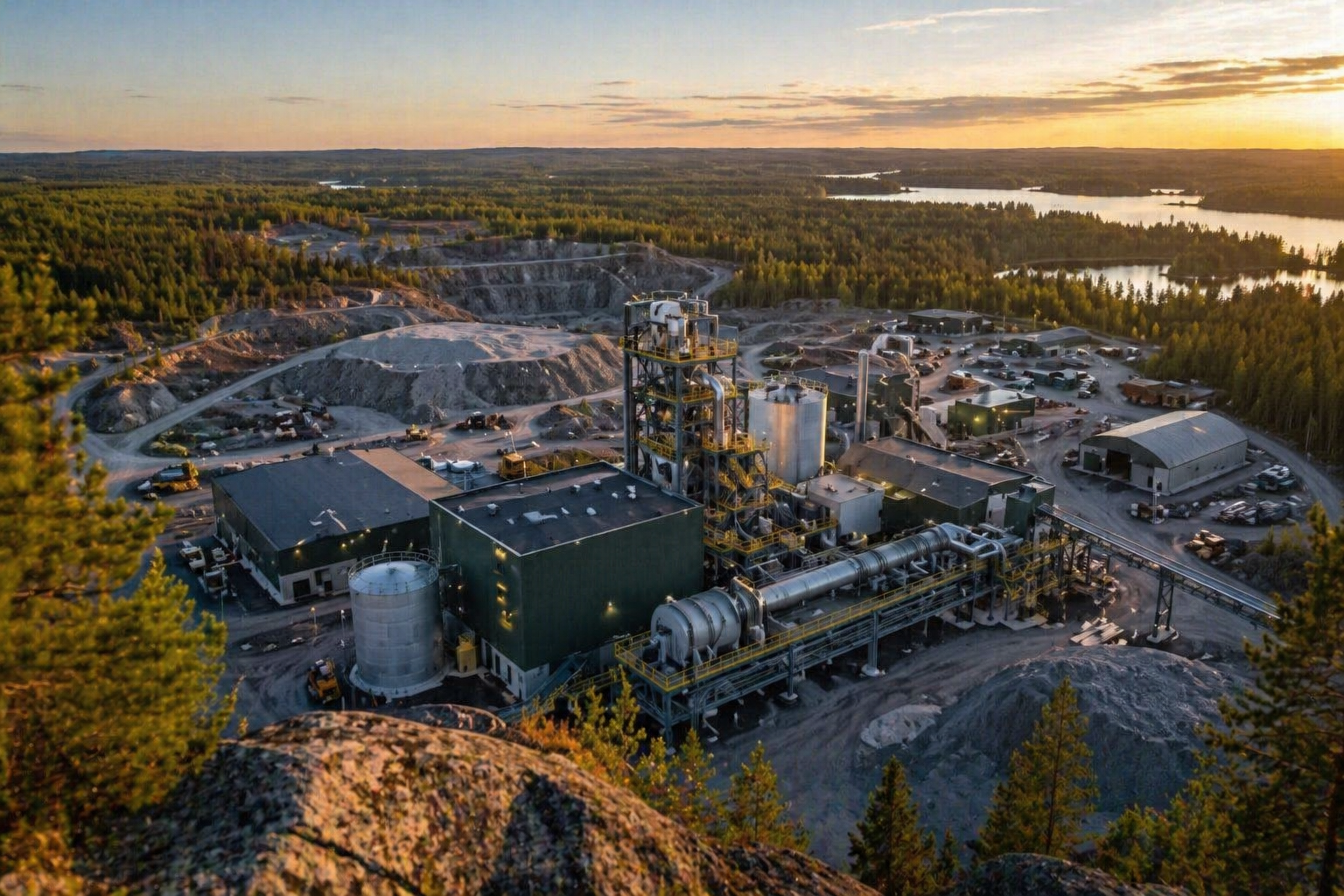
Finland has become the center of Europe’s lithium ambitions. The country recently launched its first integrated lithium mining and processing operation. This project is valued at 783 million euros and represents a major investment in the future of European energy.
The key site is located in western Finland, at the Syväjärvi quarry. This area contains significant lithium reserves, making it an ideal location for extraction.
But what makes this project unique is not just the mine. It is the full production chain built around it.
From Rock to Battery: The Full Production Cycle
Most lithium projects focus on one stage of production. Some extract raw material, others refine it. Rarely are all steps combined in one place.
In Finland, the entire process happens within a 43-kilometer radius. This creates a highly efficient system:
- Lithium ore is extracted from the quarry
- Trucks transport the material to a concentration plant
- The ore is processed into a sand-like concentrate
- The concentrate is then refined into battery-grade lithium hydroxide
This final product is essential for modern battery manufacturing. It is the form of lithium used in electric vehicles and high-performance electronics.
By keeping all stages close together, the project reduces transport costs, lowers emissions, and increases control over quality.
Strategic Independence from Global Supply Chains
One of the main goals of this project is to reduce dependence on imports. Currently, Europe relies heavily on lithium processed in Asia.
This dependency creates several risks:
- Supply disruptions due to geopolitical tensions
- Price volatility
- Limited control over environmental standards
By building its own production system, the EU can manage these risks more effectively. It gains the ability to secure stable supplies for its growing battery industry.
This is especially important as Europe aims to become a leader in electric mobility.
The Companies Behind the Project
The project is managed by Keliber Oy, a Finnish company focused on lithium production. However, it is supported by a strong network of investors.
The ownership structure includes:
- 80% held by Sibanye-Stillwater, a major mining company from South Africa
- 20% controlled by the Finnish state through Finnish Minerals Group
This combination of private investment and public support reflects the strategic importance of the project.
The European Investment Bank has also contributed 150 million euros in funding. This shows that the initiative is aligned with broader EU goals for sustainability and industrial growth.
A Small Project with Big Impact
At first glance, the project may seem relatively small compared to global mining operations. However, its importance goes far beyond its size.
Industry leaders describe it as a key step toward building a European battery ecosystem. It is not just about producing lithium. It is about creating a complete value chain inside the region.
This includes:
- Mining
- Processing
- Battery manufacturing
- Recycling
Each part supports the others, creating a strong and resilient system.
Supporting the Green Energy Transition
Europe has set ambitious targets for reducing carbon emissions. Electric vehicles and renewable energy storage are central to this plan.
However, these technologies depend on reliable access to raw materials. Without lithium, the transition to clean energy would slow down.
By investing in domestic production, the EU ensures that its climate goals remain achievable.
This also reduces the environmental impact of long-distance transport. Producing lithium locally means fewer emissions and better control over production standards.
Economic Benefits for the Region
The project is expected to bring significant economic benefits to Finland and the wider EU.
These include:
- Job creation in mining, processing, and logistics
- Development of new technologies
- Increased investment in related industries
Local communities will benefit from new infrastructure and business opportunities.
At the same time, Europe strengthens its position in the global market for battery materials.
Innovation and Technology Development
The Finnish project is not just about extraction. It is also a center for technological innovation.
Engineers are working on improving efficiency and reducing environmental impact. This includes:
- Advanced processing techniques
- Energy-efficient production methods
- Waste reduction systems
Such innovations can be applied to other projects across Europe, creating a ripple effect of improvement.
Environmental Considerations
Mining always raises environmental concerns. However, this project aims to set a new standard for responsible production.
Key measures include:
- Minimizing land disruption
- Reducing water usage
- Managing waste safely
By keeping the production chain local, the project also lowers its carbon footprint.
This aligns with the EU’s strict environmental regulations and sustainability goals.
The Role of Government Support
Government involvement has been crucial in making this project possible.
Public funding helps reduce financial risks and encourages private investment. It also ensures that the project aligns with national and European priorities.
The Finnish government, through its investment arm, plays an active role in guiding development.
This partnership between public and private sectors is a model for future projects.
Challenges Ahead
Despite its potential, the project faces several challenges.
These include:
- Fluctuating global lithium prices
- Competition from established producers
- Technical difficulties in scaling production
There is also the challenge of building a complete battery ecosystem in Europe. Lithium production is only one part of the puzzle.
However, the strong support from investors and governments increases the chances of success.
Future Expansion Plans
The current project is only the beginning. Plans include opening additional mining sites in the region.
In total, up to six new locations could be developed. This would significantly increase production capacity.
As demand continues to grow, Europe may need even more projects like this.
The Finnish model could be replicated in other countries with suitable resources.
Impact on the Global Market
Europe’s move into lithium production could reshape the global market.
By reducing its dependence on imports, the EU becomes a more independent player.
This could lead to:
- More balanced global supply chains
- Increased competition
- Greater stability in prices
Other regions may follow this example, leading to a more decentralized industry.
The Role of Finland in Europe’s Strategy
Finland has positioned itself as a key player in Europe’s energy future.
The country’s natural resources, combined with strong governance and innovation, make it an ideal location for such projects.
Its success could inspire similar initiatives across the continent.
Timeline and Production Goals
The project is already in an advanced stage. Testing at the processing plant is underway.
The first batch of lithium hydroxide is expected to be produced and packaged by the end of the year.
This marks the beginning of a new chapter for Europe’s battery industry.
Why This Matters for Consumers
For everyday consumers, this project may seem distant. However, its impact will be felt in many ways.
It could lead to:
- More stable prices for electric vehicles
- Faster development of new technologies
- Greater availability of clean energy solutions
In the long term, it supports a more sustainable and resilient economy.
A Turning Point for Europe
The launch of a full-cycle lithium production system in Finland represents a turning point.
It shows that Europe is ready to take control of its energy future.
Instead of relying on external suppliers, the region is building its own capabilities.
This is not just an industrial project. It is a strategic decision with long-term consequences.
Conclusion
The EU’s investment in lithium production is a clear signal of its priorities. Energy independence, sustainability, and economic resilience are at the center of this strategy.
The Finnish project demonstrates how these goals can be achieved in practice. By combining resources, technology, and political will, Europe is creating a new model for industrial development.
While challenges remain, the direction is clear. Europe is moving toward a future where it controls the materials that power its economy.
And lithium is at the heart of that transformation.