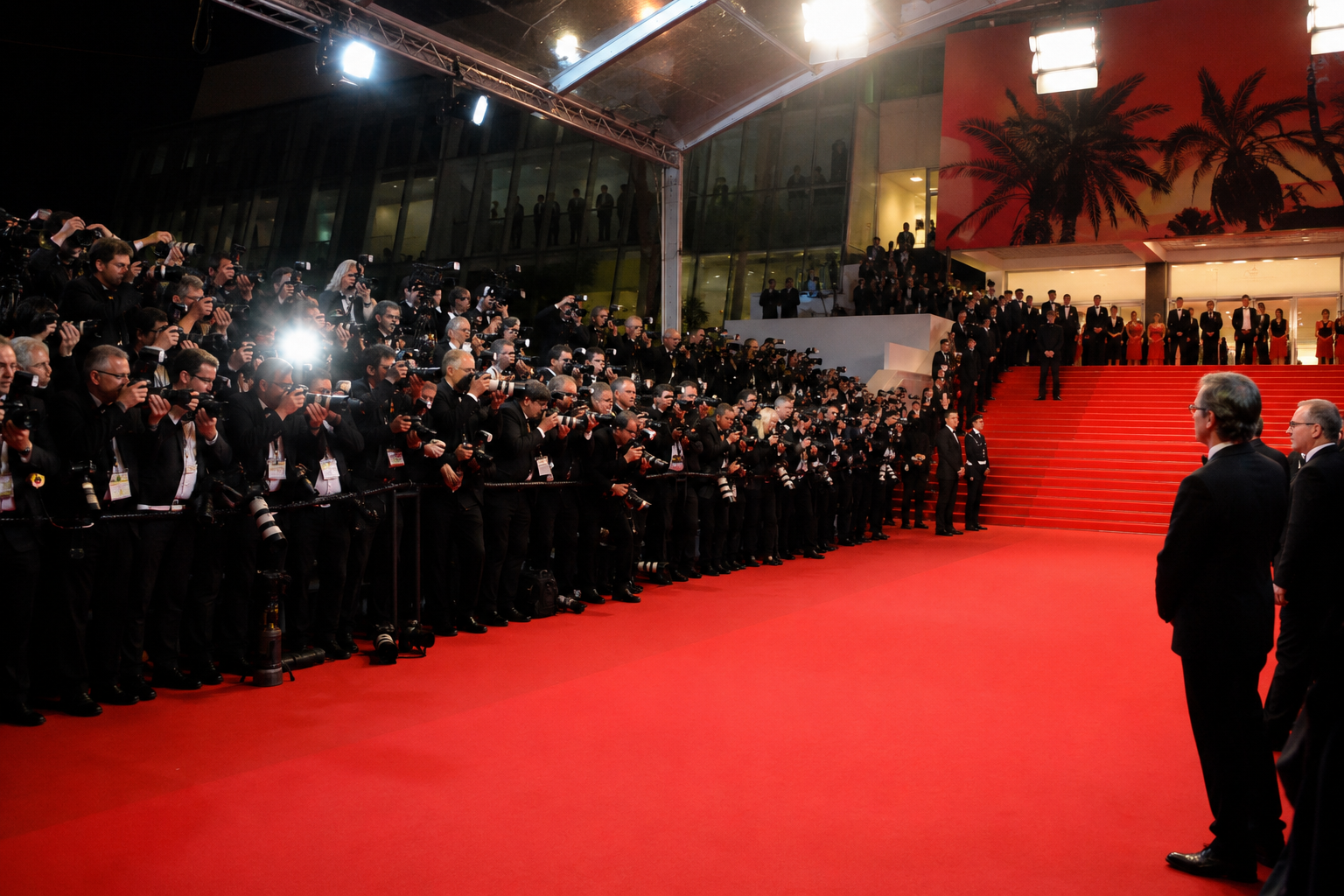
The 79th Cannes Film Festival officially began on May 12 with a ceremony that combined cinema history, emotional tributes, political reflection, and international glamour. This year’s opening night was more than a traditional red carpet event. It became a celebration of filmmaking as a global cultural force during a period of major changes in both cinema and society.
From Peter Jackson receiving an honorary Palme d’Or to Jane Fonda delivering a powerful speech about freedom and empathy, the opening ceremony showed why Cannes continues to hold a unique position in the film industry.
For decades, the festival has represented more than awards and premieres. Cannes is where artistic cinema meets global influence. It is where unknown filmmakers can become international stars and where established directors return to redefine their careers.
This year’s edition arrives at a moment when streaming platforms, artificial intelligence, geopolitical conflicts, and changing audience habits are reshaping entertainment worldwide. Against that backdrop, Cannes once again positioned itself as a space where cinema remains deeply human.
Why Cannes Still Matters in the Streaming Era
The global film industry has changed dramatically over the past decade.
Streaming services transformed how audiences consume movies. Theaters faced serious challenges after the pandemic. Social media shortened attention spans, while algorithms increasingly influence what viewers watch.
Despite these changes, Cannes continues to maintain enormous cultural and professional importance.
The festival remains one of the few places where cinema is treated not simply as entertainment, but as art with political, emotional, and social significance.
Winning at Cannes can completely change the future of a film. Directors often secure international distribution deals, award season attention, and global media exposure after premiering there.
For actors, appearing in a Cannes competition film can redefine careers.
For audiences, Cannes often introduces the films that shape cinematic conversations for years.
Peter Jackson Became the Emotional Center of Opening Night
One of the most memorable moments of the ceremony was the honorary Palme d’Or presented to New Zealand filmmaker Peter Jackson.
The award recognized his contribution to modern cinema and arrived during the 25th anniversary year of The Lord of the Rings: The Fellowship of the Ring.
Jackson’s influence on filmmaking extends far beyond fantasy movies.
Before The Lord of the Rings, large-scale fantasy adaptations were considered commercially risky and technically difficult. Jackson proved that ambitious literary adaptations could become both critical and financial successes.
His trilogy changed Hollywood permanently.
A Trilogy That Defined an Entire Generation
When The Fellowship of the Ring premiered in 2001, audiences immediately understood they were watching something different.
The trilogy combined emotional storytelling, groundbreaking visual effects, massive world-building, and strong performances. It also demonstrated how digital technology could support storytelling without overwhelming it.
The three films collectively won 17 Academy Awards and became one of the most successful cinematic projects in history.
Even today, many directors, cinematographers, and visual effects artists cite Jackson’s trilogy as a major inspiration.
The films also transformed New Zealand into a global filmmaking destination and expanded opportunities for large-scale fantasy productions worldwide.
Elijah Wood’s Speech Added Personal Emotion
Actor Elijah Wood, who played Frodo Baggins, presented the award to Jackson during the ceremony.
His speech became one of the emotional highlights of the evening.
Wood recalled receiving the phone call offering him the role of Frodo and described the moment as life-changing. According to him, the experience divided his life into “before and after.”
The audience responded warmly because the relationship between Jackson and the cast has always appeared unusually genuine for a blockbuster franchise.
Unlike many large productions, The Lord of the Rings trilogy created a lasting sense of creative family among its actors and crew.
That emotional connection remains visible even decades later.
Peter Jackson’s Humble Response
When accepting the award, Jackson joked that he never considered himself “a Palme d’Or kind of guy.”
The comment reflected the director’s personality and career path.
Jackson did not emerge from a powerful Hollywood system. He grew up in a country with a relatively small film industry and began making low-budget horror films with limited resources.
His success story continues to inspire filmmakers because it demonstrates how creative ambition and persistence can overcome geographical and industrial limitations.
Music and Cinema Came Together on the Cannes Stage
The ceremony also included a special musical tribute connected to Jackson’s documentary work.
French-Congolese artist Theodora and French singer-songwriter Oklou performed Get Back by The Beatles.
The song choice referenced Jackson’s acclaimed documentary project The Beatles: Get Back, which restored and reinterpreted archival footage from the legendary band.
The performance symbolized one of Cannes’ recurring themes: the relationship between cinema and other art forms.
Film festivals increasingly celebrate projects that cross creative boundaries, combining music, documentary storytelling, visual experimentation, and digital restoration technologies.
Jane Fonda and Gong Li Represented Two Cinematic Worlds
Another defining moment of the opening ceremony came when Jane Fonda and Chinese actress Gong Li officially declared the festival open.
The pairing carried symbolic importance.
Fonda represents decades of American cinema history and political activism, while Gong Li remains one of the most influential figures in Asian cinema.
Together, they represented the global nature of modern filmmaking.
A Rare Cross-Cultural Opening
Festival organizers described the pairing as historic because Cannes rarely opens with such a strong East-West cinematic partnership.
Their appearance reflected how international cinema has evolved.
For many years, Hollywood dominated global cultural conversations. Today, however, Asian cinema plays an increasingly central role in shaping trends, aesthetics, and storytelling techniques.
Directors and actors from South Korea, China, Japan, and other Asian countries now influence worldwide film culture more than ever before.
Cannes has actively supported this transformation by giving greater visibility to non-Western filmmakers.
Gong Li Spoke About the Universal Power of Film
During her speech, Gong Li emphasized cinema’s ability to transcend language, culture, and generations.
Her message resonated strongly in a world experiencing political division and cultural polarization.
Films allow audiences to experience emotions from perspectives different from their own. That process creates empathy, curiosity, and understanding.
This idea remains central to the Cannes identity.
The festival consistently promotes cinema as an international language capable of connecting people across borders.
Jane Fonda Delivered One of the Most Powerful Speeches of the Night
At 88 years old, Jane Fonda remains one of the most respected voices in entertainment and activism.
Her speech at Cannes focused not on celebrity culture, but on the social responsibility of storytelling.
Fonda described cinema as “an act of resistance” and emphasized the importance of giving voice to marginalized communities.
Why Her Message Resonated
Fonda’s words reflected growing conversations inside the entertainment industry about representation, freedom of expression, and political responsibility.
Many filmmakers now face pressure from:
- political censorship;
- online outrage;
- commercial algorithms;
- shrinking theatrical markets;
- ideological polarization.
In that environment, Fonda’s defense of artistic courage felt particularly relevant.
Her speech also highlighted a broader Cannes tradition: treating cinema as part of public and intellectual life rather than simply commercial entertainment.
The Cannes Jury Reflects Global Cinema Trends
As always, the festival introduced its international jury during the opening ceremony.
This year’s jury demonstrates Cannes’ continued focus on diversity across geography, filmmaking style, and artistic background.
South Korean director Park Chan-wook serves as jury president.
His selection reflects the enormous global influence of Korean cinema following the international success of films and series such as Parasite and Squid Game.
Why Park Chan-wook’s Leadership Matters
Park Chan-wook is known for visually ambitious and emotionally intense films.
His work combines psychological complexity with strong cinematic style, making him one of the most respected contemporary directors.
Having him lead the jury signals that Cannes continues valuing artistic risk and distinctive authorial voices.
Demi Moore’s Presence Draws Attention
American actress Demi Moore also joined the jury.
Her appearance generated significant media attention because of her recent career resurgence and growing recognition for dramatic performances.
Cannes often blends veteran artists with emerging creative voices. Moore’s inclusion reflects this balance.
A Truly International Jury
The full jury includes filmmakers and actors from multiple countries and cinematic traditions.
This diversity matters because Cannes judges films from around the world, often comparing radically different storytelling approaches.
An international jury increases the likelihood that smaller national cinemas receive fair attention alongside major productions.
The Opening Film Set a Different Tone
This year’s opening film was Electric Kiss, a historical comedy directed by French filmmaker Pierre Salvadori.
Choosing a comedy for opening night created a lighter atmosphere after several politically intense festival editions in recent years.
Why Opening Films Matter
The opening film often signals the emotional tone organizers want for the festival.
Some years prioritize political seriousness. Others focus on experimentation or social commentary.
A historical comedy suggests Cannes wants to balance prestige cinema with entertainment and emotional accessibility.
This is important because critics sometimes accuse major film festivals of becoming disconnected from general audiences.
The Biggest Premieres Already Generating Buzz
Several highly anticipated films are scheduled to premiere during the festival.
These projects feature internationally recognized directors and actors, increasing global media interest.
Sandra Hüller Continues Her Strong Festival Presence
Sandra Hüller appears in Homeland by Polish director Paweł Pawlikowski.
After her acclaimed performances in recent years, Hüller has become one of Europe’s most respected actresses.
Her involvement alone makes the film one of the festival’s most anticipated premieres.
Scarlett Johansson and Adam Driver Return to Cannes
Paper Tiger brings together Adam Driver, Miles Teller, and Scarlett Johansson.
Star-powered projects often create tension inside Cannes because festivals traditionally prioritize artistic quality over celebrity appeal.
However, Cannes also understands the importance of international visibility and media attention.
Balancing art-house credibility with global relevance remains one of the festival’s ongoing challenges.
Pedro Almodóvar’s New Film Draws Immediate Interest
Spanish director Pedro Almodóvar returns with Bitter Christmas.
Almodóvar remains one of the most influential European directors alive today. His films frequently explore loneliness, memory, identity, family trauma, and emotional reinvention.
Each Cannes appearance from Almodóvar becomes a major cinematic event because his visual style and storytelling voice are instantly recognizable.
Ukrainian Cinema Receives Important Visibility
One of the festival’s special screenings includes Spring, a film set in occupied Ukrainian territory during the war.
The story follows a priest secretly identifying executed civilians and helping families bury them properly despite occupation restrictions.
Why This Screening Matters
Cannes has increasingly used its platform to highlight films connected to war, displacement, and humanitarian crises.
Showing Ukrainian stories at major international festivals keeps global attention focused on the human consequences of conflict.
Cinema cannot stop wars, but it can preserve memory, document suffering, and humanize statistics that otherwise become abstract headlines.
Mstyslav Chernov’s Growing International Influence
Ukrainian filmmaker and journalist Mstyslav Chernov will lead the jury for the L’Œil d’Or documentary award.
Following the success of 20 Days in Mariupol, Chernov became one of the most internationally recognized Ukrainian documentary voices.
His appointment demonstrates growing respect for documentary filmmaking within the festival system.
Documentaries now play a larger role in global cultural conversations because audiences increasingly seek authenticity during periods of political uncertainty and misinformation.
Cannes Faces Major Industry Questions in 2026
Beyond premieres and red carpets, this year’s festival unfolds during major industry transformation.
Several issues dominate professional conversations:
- the future of theatrical cinema;
- artificial intelligence in filmmaking;
- streaming platform influence;
- declining mid-budget productions;
- audience fragmentation;
- rising production costs.
Artificial Intelligence Creates Debate
AI technology has become one of the industry’s most controversial topics.
Some filmmakers fear automation could weaken creative professions such as screenwriting, editing, dubbing, and visual effects.
Others believe AI tools may expand creative possibilities and reduce production costs for independent artists.
Cannes 2026 already includes multiple panel discussions dedicated to these questions.
Theatrical Cinema Is Still Fighting for Relevance
Streaming services permanently changed viewing habits.
However, festivals like Cannes continue defending the communal experience of watching films in theaters.
Large premieres inside the Grand Lumière Theatre remain emotionally powerful partly because audiences experience reactions together in real time.
This collective atmosphere cannot be fully replicated through home streaming.
Fashion and Celebrity Culture Still Drive Global Attention
Although Cannes prioritizes cinema, fashion and celebrity culture remain central parts of the festival’s media identity.
Red carpet appearances generate billions of online views and social media interactions every year.
Why Fashion Matters at Cannes
Fashion brands view Cannes as one of the most valuable luxury marketing platforms in the world.
Unlike award shows focused primarily on television audiences, Cannes combines:
- cinema prestige;
- luxury branding;
- tourism promotion;
- global media exposure.
This creates enormous commercial value.
At the same time, critics sometimes argue that celebrity fashion coverage overshadows the films themselves.
The festival constantly balances artistic seriousness with entertainment media attention.
Cannes Continues to Shape Award Season
Historically, many Cannes premieres later dominate international award conversations.
Films first shown at Cannes often appear later at:
- the Oscars;
- BAFTA Awards;
- Golden Globes;
- European Film Awards.
Winning the Palme d’Or can significantly increase a film’s distribution opportunities and commercial visibility.
For independent productions, Cannes exposure can determine whether a movie reaches global audiences or remains limited to small festival circuits.
Why Film Festivals Still Matter
In the digital age, some people question whether traditional festivals remain necessary.
However, Cannes continues proving that curated cultural spaces still matter.
Algorithms typically recommend content based on past behavior. Festivals introduce audiences to unfamiliar voices, styles, and countries.
That difference is important.
Cinema evolves when audiences encounter stories outside their normal viewing habits.
Festivals create those opportunities.
The Human Side of Cannes
Behind the glamour and media coverage, Cannes also represents thousands of personal ambitions.
Young filmmakers arrive hoping to secure financing. Actors search for career-defining performances. Producers negotiate international distribution deals. Journalists attempt to identify the next cinematic breakthrough.
For many participants, a single Cannes screening can change an entire career trajectory.
That emotional intensity helps explain why the festival remains culturally powerful after nearly eight decades.
Final Thoughts
The opening of the 79th Cannes Film Festival demonstrated why the event continues to occupy a unique place in global culture.
This year’s ceremony combined nostalgia, political reflection, artistic celebration, and international collaboration.
Peter Jackson’s honorary Palme d’Or reminded audiences of cinema’s power to create lasting cultural myths. Jane Fonda’s speech emphasized storytelling as a form of resistance and empathy. Gong Li highlighted cinema’s ability to unite people across cultures.
Together, these moments reflected the larger purpose of Cannes itself.
The festival is not simply about awards or celebrity appearances.
It is about preserving the idea that films still matter deeply in a rapidly changing world.
As technology transforms entertainment and audiences consume content faster than ever before, Cannes continues defending cinema as an emotional, artistic, and human experience.
That is why millions of people around the world still pay attention every May when the lights go down inside the Grand Lumière Theatre and another Cannes Film Festival begins.