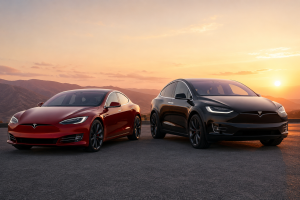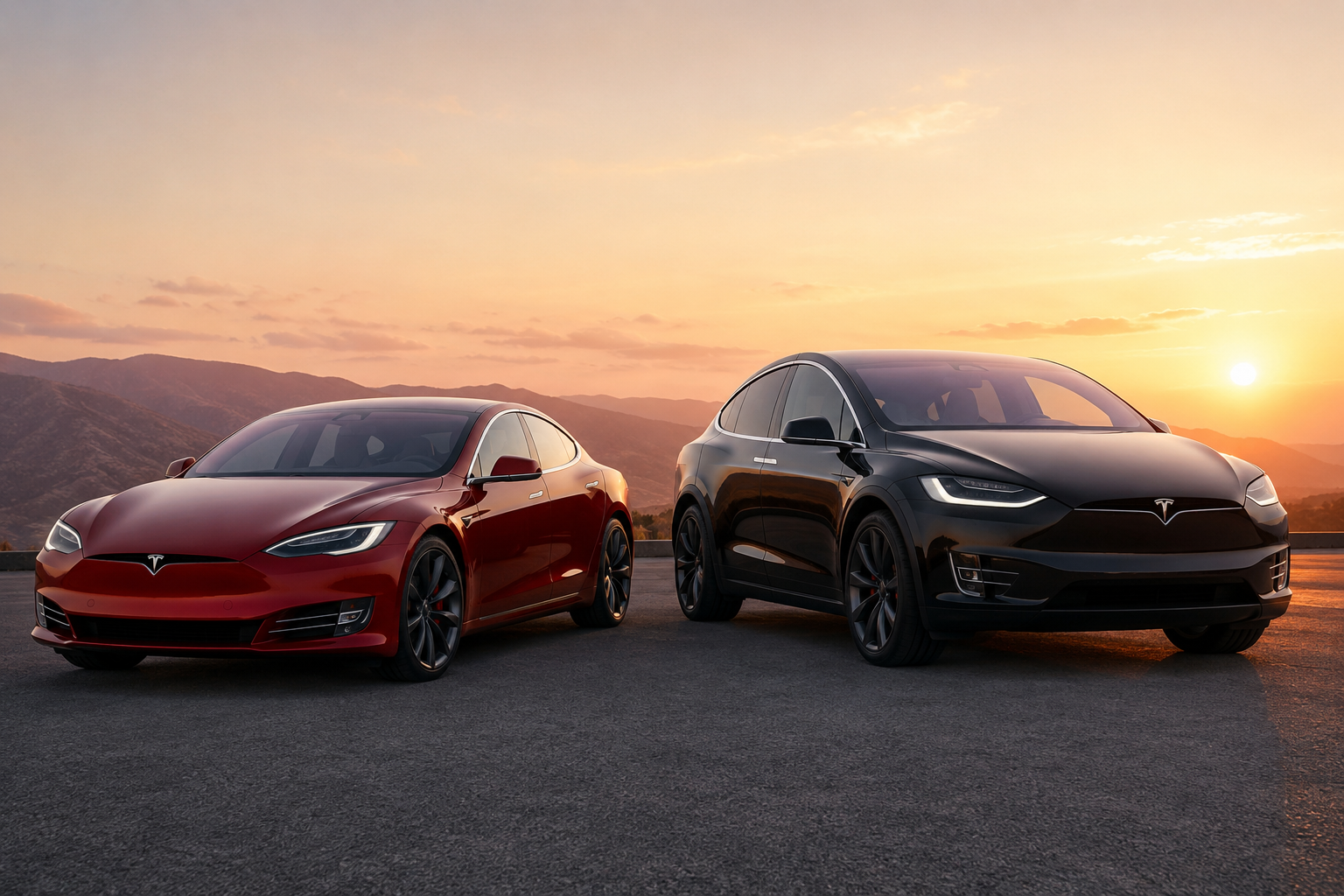
For more than a decade, two vehicles helped redefine what the automotive industry could become. Tesla Model S and Tesla Model X were not just electric cars. They became symbols of a technological shift that forced traditional automakers to rethink the future of transportation.
Now that Tesla has officially stopped production of both models in 2026, the company is closing one of the most influential chapters in modern automotive history. The decision marks the end of an era that began when electric vehicles were still viewed as experimental, expensive, and impractical.
The final units have already left Tesla factories, and with them disappears a generation of vehicles that changed consumer expectations around speed, software, design, and energy efficiency.
Why Model S Changed the Industry
When Tesla introduced the Model S in 2012, the global electric vehicle market looked completely different from today. Most EVs had short driving ranges, weak performance, and designs that felt more like science projects than premium vehicles.
Tesla took the opposite approach.
Instead of building a small urban commuter, the company created a luxury sedan with long-range capability, rapid acceleration, and advanced software integration. At the time, this combination seemed almost impossible.
The Model S immediately attracted attention because it solved several major problems that had prevented people from considering electric cars seriously.
Long Driving Range Removed Fear
One of the biggest concerns around EVs was range anxiety. Drivers worried they would run out of battery power before reaching their destination.
Tesla addressed this issue directly. Early versions of the Model S offered significantly more range than competitors. Over time, improvements in battery technology pushed the range even further. Final versions reached approximately 660 kilometers on a single charge under ideal conditions.
For many consumers, this changed the conversation completely. Electric vehicles were no longer limited to short city trips. They became realistic alternatives to gasoline-powered cars.
The Interior Felt Like the Future
Tesla also transformed the driving experience inside the cabin.
Instead of filling the dashboard with traditional buttons, the company introduced a large touchscreen that controlled nearly every vehicle function. At the time, many critics questioned whether drivers would accept such a radical design.
Eventually, the minimalist approach became one of Tesla’s most recognizable features.
Today, large infotainment displays are common across the automotive industry. Many manufacturers adopted similar concepts after seeing the popularity of Tesla interiors.
Performance Surprised the Automotive World
Another major reason behind the success of the Model S was performance.
Electric motors delivered instant torque, allowing the vehicle to accelerate faster than many sports cars. Tesla proved that sustainability and excitement could exist together.
This became especially clear with the Plaid version.
The Tesla Model S Plaid produced more than 1,000 horsepower and accelerated from 0 to 97 km/h in under two seconds. These numbers placed an electric sedan into supercar territory.
For years, electric vehicles had been associated with compromise. Tesla eliminated that image.
The Importance of the Supercharger Network
A great electric vehicle alone would not have been enough to reshape the market.
Tesla understood that charging infrastructure represented one of the largest barriers to EV adoption. That is why the company invested heavily in the Supercharger network.
At a time when public charging stations were rare and unreliable, Tesla owners gained access to fast chargers across major highways and cities.
This ecosystem created confidence among drivers. Long-distance travel became easier and more practical.
The strategy also gave Tesla a major competitive advantage. Other automakers struggled because their customers depended on fragmented charging networks with inconsistent performance.
Tesla essentially built an entire transportation ecosystem instead of simply selling cars.
How Model X Expanded Tesla’s Influence
While the Model S established Tesla in the luxury sedan market, the Model X helped the company enter the growing SUV segment.
Released with distinctive Falcon Wing doors, the Model X quickly became one of the most recognizable electric SUVs in the world.
The vehicle combined family practicality with high performance and advanced technology.
For many buyers, the Model X represented something unique: a spacious SUV that could compete with premium gasoline-powered rivals while offering lower emissions and futuristic features.
Safety Became a Major Selling Point
Tesla repeatedly emphasized safety in the development of the Model X.
The absence of a large gasoline engine in the front created additional crumple space, improving crash protection. The low-mounted battery pack also lowered the vehicle’s center of gravity, reducing rollover risk.
These engineering advantages helped Tesla strengthen consumer trust during a period when many people still viewed electric vehicles with skepticism.
Technology Continued to Evolve
Tesla regularly updated both the Model S and Model X through software improvements.
Unlike traditional cars that remained mostly unchanged after purchase, Tesla vehicles evolved over time. New features, interface changes, performance improvements, and Autopilot capabilities could appear through over-the-air updates.
This approach changed customer expectations across the automotive industry.
Consumers began to expect their cars to behave more like smartphones or computers, constantly improving after purchase.
Today, software-defined vehicles have become one of the industry’s biggest trends.
Autopilot and the Shift Toward Software-Based Cars
Tesla’s Autopilot system played a major role in defining the brand identity of the Model S and Model X.
Although the technology generated controversy and regulatory attention, it also accelerated global interest in driver assistance systems and autonomous driving research.
Before Tesla, advanced software features were usually hidden in premium luxury brands and expensive option packages. Tesla presented them as central elements of the driving experience.
The company’s aggressive focus on software forced competitors to increase investments in artificial intelligence, sensors, and digital ecosystems.
Modern vehicles now compete not only in horsepower or fuel efficiency, but also in processing power, connectivity, and user interface quality.
Tesla helped create this transformation.
Why Tesla Decided to End Production
Considering the impact of these vehicles, many industry observers were surprised by Tesla’s decision to discontinue them.
However, several factors likely influenced the move.
Changing Consumer Demand
The automotive market has shifted heavily toward crossovers, compact SUVs, and more affordable electric vehicles.
While the Model S and Model X remained technologically impressive, their sales volumes declined compared to newer Tesla products such as the Model 3 and Model Y.
Consumers increasingly prioritize affordability, efficiency, and practicality over premium flagship vehicles.
Tesla appears focused on scaling production and expanding mass-market adoption rather than maintaining low-volume luxury models.
Competition Became Much Stronger
When Tesla launched the Model S, there were very few serious electric competitors.
Today, nearly every major automaker produces EVs.
Companies like BMW, Mercedes-Benz, Porsche, Hyundai, Kia, Lucid, Rivian, and BYD now compete aggressively in multiple electric vehicle segments.
Luxury EV buyers have far more choices than they did a decade ago.
This increased competition reduced the unique market position once held by the Model S and Model X.
Tesla Is Focusing on New Priorities
Tesla’s strategy has evolved significantly in recent years.
The company is investing heavily in artificial intelligence, robotics, autonomous driving systems, energy storage, and next-generation vehicle platforms.
Elon Musk repeatedly emphasized long-term projects such as robotaxis and AI-driven transportation systems.
From a business perspective, continuing low-volume production of older flagship models may no longer align with Tesla’s broader goals.
The Legacy of Model S and Model X
Even though production has ended, the influence of these vehicles will remain visible throughout the automotive industry for many years.
They Forced Traditional Automakers to React
Before Tesla’s rise, many large automotive companies treated electric vehicles cautiously.
Some executives openly doubted consumer demand for EVs. Others viewed electrification as a distant future rather than an urgent transition.
The success of the Model S changed corporate strategy worldwide.
Traditional manufacturers suddenly faced pressure from investors, governments, and consumers to accelerate electric development programs.
Billions of dollars shifted toward battery production, software engineering, and EV platform design.
Without Tesla’s early success, the global transition toward electrification would likely have moved much slower.
They Changed Public Perception
Tesla also transformed how people emotionally viewed electric vehicles.
Before the Model S, EVs were often associated with limitations and sacrifice. After Tesla, electric cars became linked with innovation, performance, and status.
This cultural shift may be one of the company’s most important achievements.
Consumers no longer ask whether electric vehicles can compete with gasoline cars. Instead, many now ask when gasoline cars will disappear completely.
They Introduced a New Business Model
Tesla’s direct-to-consumer sales strategy disrupted the traditional dealership system in several markets.
The company also prioritized software integration, online ordering, and simplified vehicle customization.
Many automotive brands later adopted similar digital sales strategies.
Tesla proved that the automotive business could operate differently from the century-old dealership model that dominated the industry for decades.
The Emotional Side of the Story
For Tesla fans, the end of the Model S and Model X carries emotional significance.
These were the vehicles that built the company’s reputation during its most uncertain years.
At the beginning, many analysts predicted Tesla would fail. Large automakers had greater manufacturing experience, stronger supply chains, and significantly larger budgets.
Yet Tesla survived and eventually became one of the world’s most valuable automotive companies.
The Model S and Model X played central roles in that journey.
They represented risk-taking, technological ambition, and a willingness to challenge industry norms.
For early adopters, owning one of these vehicles often felt like participating in a technological revolution rather than simply buying transportation.
What Happens Next for Tesla
Tesla’s future now depends on whether the company can successfully transition from a disruptive automaker into a broader technology platform.
Several areas will likely define the next phase.
Autonomous Driving
Tesla continues investing heavily in Full Self-Driving technology.
If autonomous systems eventually reach widespread regulatory approval and consumer trust, the company could transform urban transportation models globally.
However, achieving reliable full autonomy remains technically and legally challenging.
Artificial Intelligence and Robotics
Tesla increasingly presents itself as an AI company rather than only a car manufacturer.
Projects such as the Optimus humanoid robot suggest Tesla wants to compete in industries far beyond automotive production.
Whether these initiatives succeed remains uncertain, but they demonstrate how dramatically the company’s ambitions have expanded.
Energy Infrastructure
Tesla’s energy division also continues growing through battery storage systems and solar products.
As renewable energy adoption increases worldwide, large-scale battery infrastructure may become as important as electric vehicles themselves.
Tesla appears determined to position itself across multiple sectors connected to electrification and AI.
Could Model S and Model X Return One Day?
Tesla has not announced direct successors for either vehicle.
Still, automotive history shows that iconic names often return in new forms.
Future Tesla flagship vehicles could eventually revive elements of the Model S or Model X legacy, especially if technology evolves enough to justify a new premium platform.
However, even if that happens, the original generation will always represent a unique historical moment.
These cars appeared when electric mobility still seemed uncertain. They proved that a startup could challenge global automotive giants and permanently alter industry direction.
That achievement alone guarantees their place in automotive history.
Why This Moment Matters Beyond Tesla
The end of the Model S and Model X is important not only for Tesla enthusiasts but also for the broader technology and business world.
These vehicles demonstrated how quickly industries can change when innovation aligns with shifting consumer expectations.
They also showed that established market leaders are vulnerable when they ignore disruptive trends.
For years, traditional automakers underestimated the speed at which software, batteries, and digital ecosystems would reshape transportation.
Tesla recognized that change earlier than most competitors.
The result was one of the most dramatic industry transformations of the 21st century.
Final Thoughts
The final production of Tesla Model S and Model X closes a defining era in electric vehicle history.
These cars were never ordinary products. They became symbols of technological disruption, environmental transition, and changing consumer expectations.
They introduced millions of people to the idea that electric vehicles could be fast, luxurious, practical, and exciting at the same time.
More importantly, they forced an entire industry to evolve faster than anyone expected.
Although Tesla is now moving toward new priorities, the influence of the Model S and Model X will remain visible in nearly every modern EV on the road today.
Their story is ultimately larger than Tesla itself.
It is the story of how one company challenged a century of automotive tradition and accelerated the global shift toward an electric future.